



A detour, this time, to share six books that you may not know about and that could make a big difference to your tough working life. Some just published, some older. No sponsorship/affiliate links here.
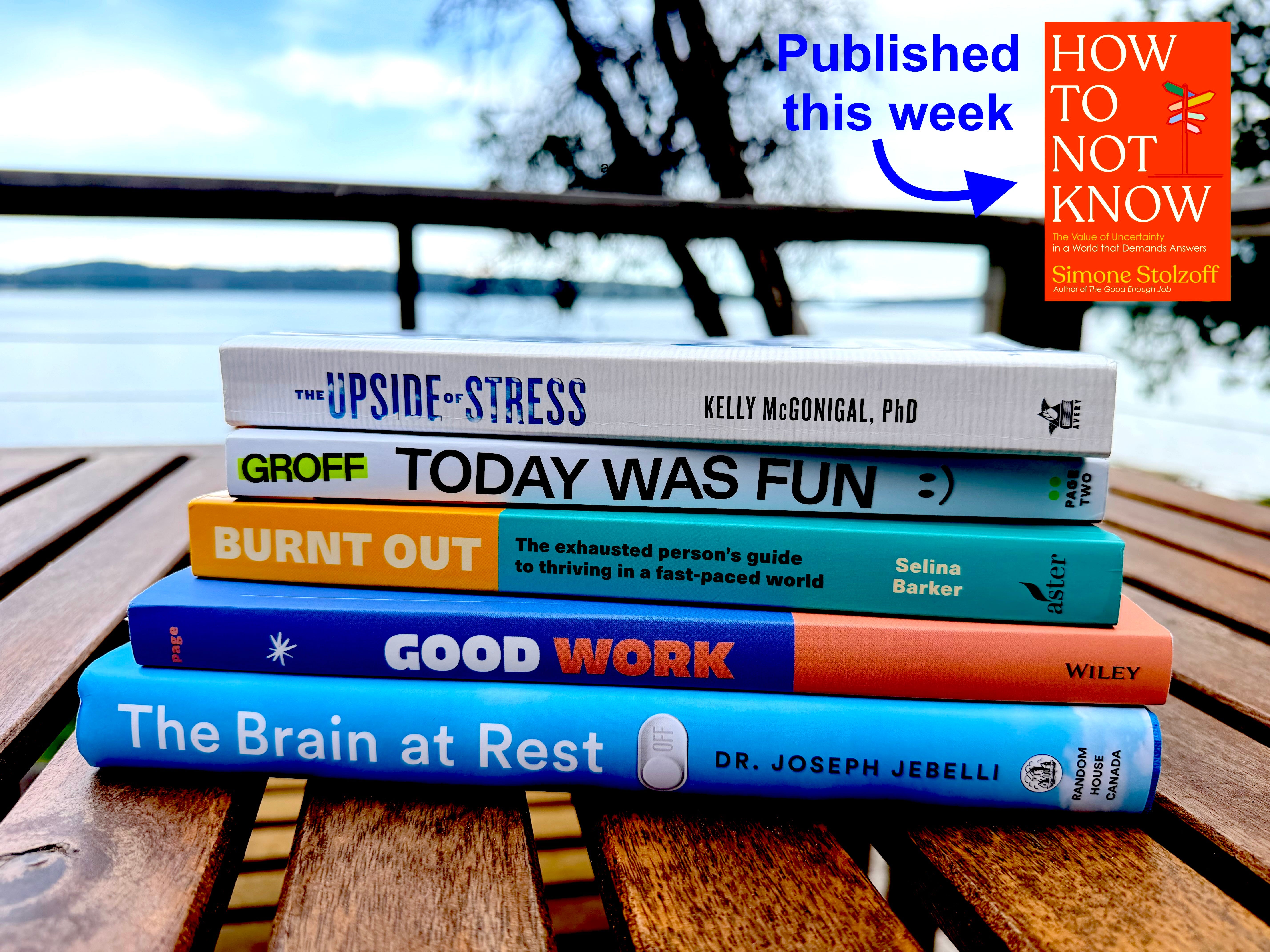
Simone Stolzoff, How to Not Know: The Value of Uncertainty in a World that Demands Answers
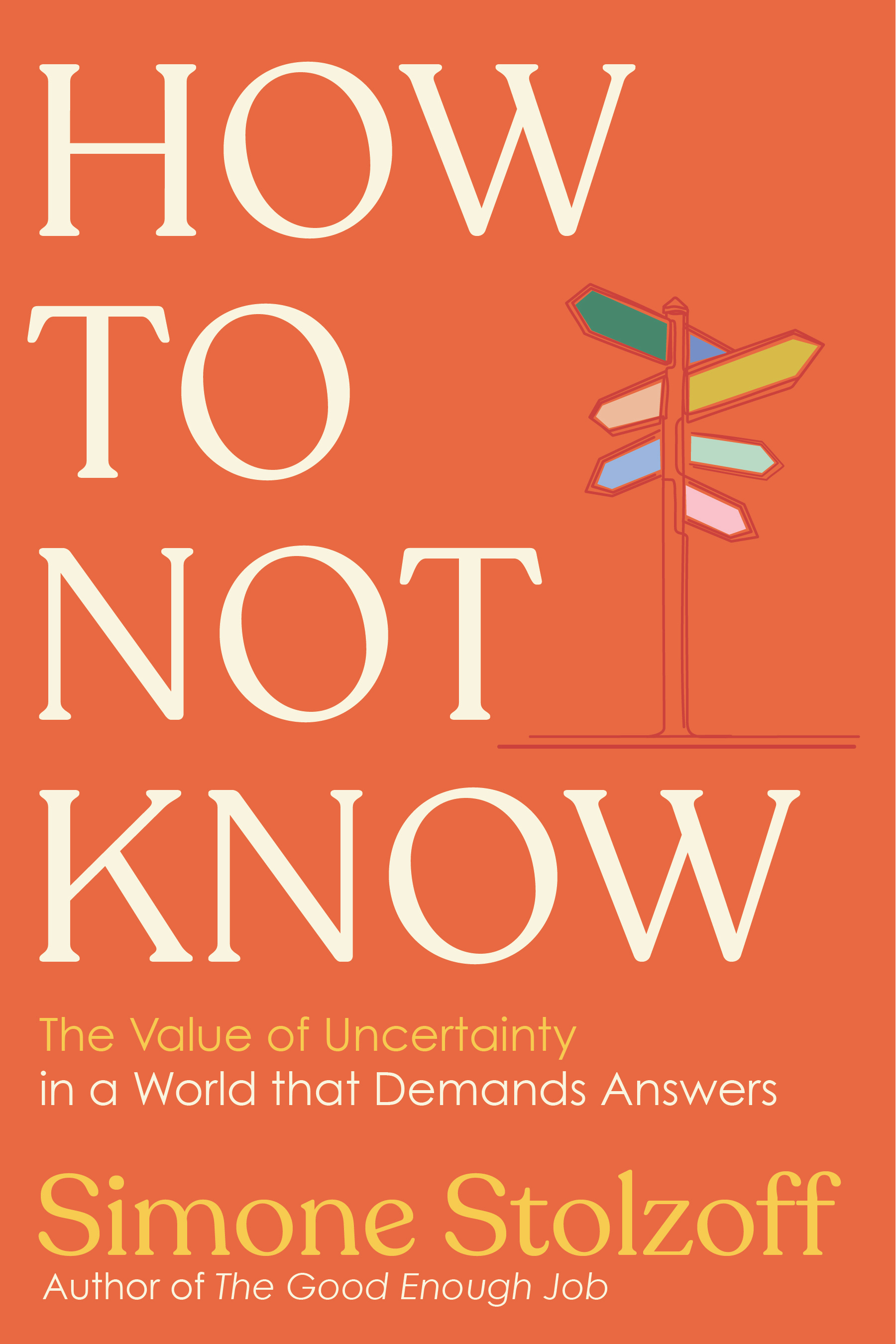
This one’s published this week! But I got a review copy and read it for you. If you sometimes struggle with uncertainty or indecision, I’d really recommend it.
Work-related indecision is so familiar. What kind of work do I want to do? Is this job right for me? Do I want to make this career move? Should I retrain? Why do I have these doubts about my work? What actually makes me happy, and makes life meaningful? (And that’s not to mention the bigger dilemmas: do I want to have children? Is my partner the right person for me? Where should we live?)
Simone Stolzoff tackles uncertainty through stories about grappling with doubts like these. His subjects aren’t celebrities, thank goodness: they’re real people with all the peculiarity of real people, whose stories he’s woven into a thoughtful, wise book. And then at the end he draws out several lessons. I won’t steal his thunder except to quote a sentence that stopped me in my tracks (and which is, in turn, a quote I didn’t know from the psychologist Rollo May): “Commitment is healthiest when it is not without doubt, but in spite of doubt.”
If this sounds up your street and you want to buy it, this link should take you to a bookseller in your country. Or there’s Amazon (including USA, UK, Canada, India).
Kelly McGonigal, The Upside of Stress: Why Stress Is Good for You, and How to Get Good at It
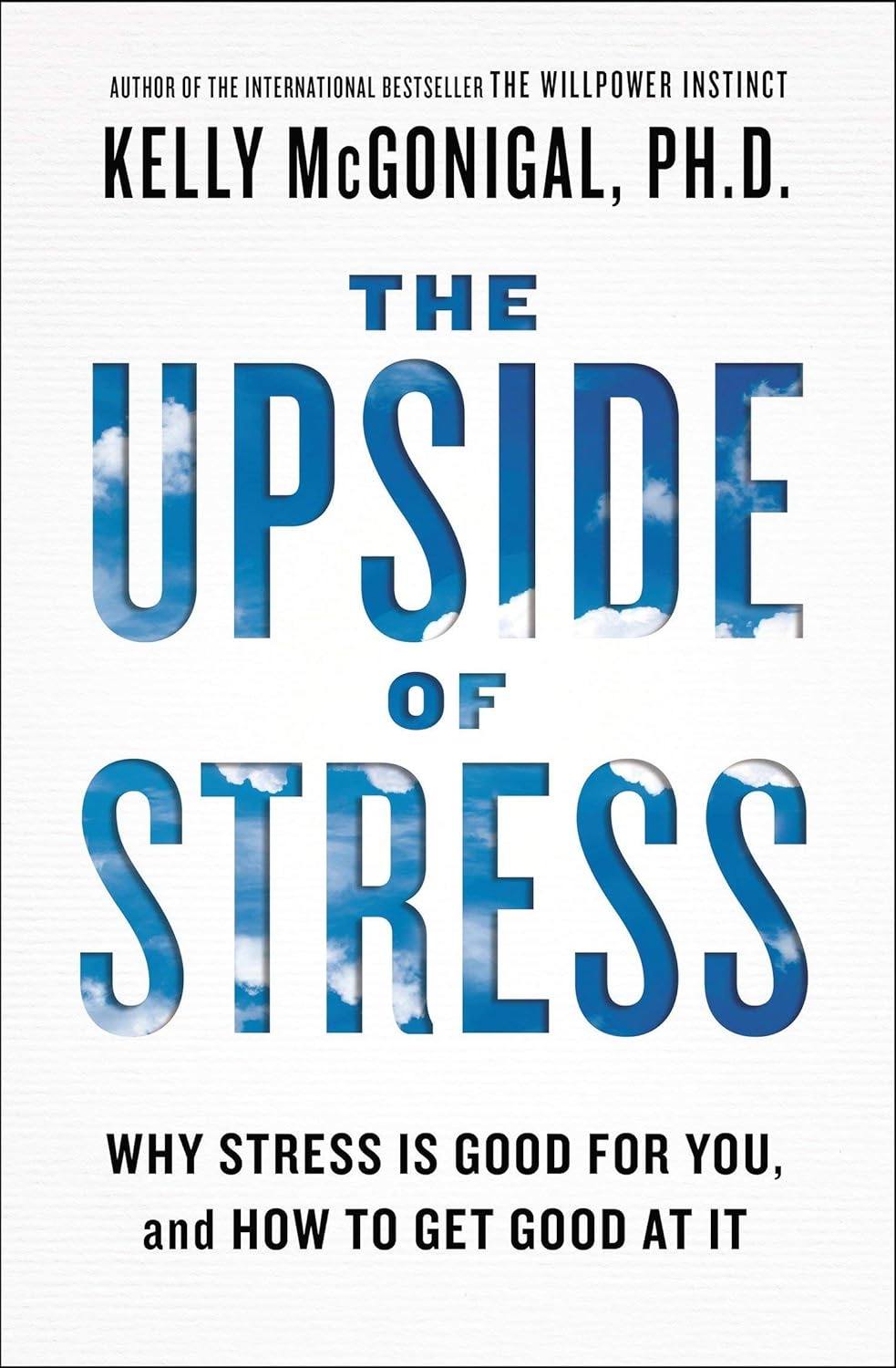
Have you heard of mindset psychology? This is the fascinating idea that, for example, kids who are shown that they have the capacity to learn (growth mindset) do better academically than those who are left believing that they’re stuck as they are, or that people who have a positive view of aging age better and live years longer than those who dread getting old.
This book is about stress mindset, the counterintuitive idea that stress is often something good, something we should welcome, because it helps us perform better and learn more—and that a life with a certain amount of stress is a better, more meaningful life than a stress-free one. Is stress bad for you? The answer to that question may be: it depends on your attitude toward stress. If you see stress as a negative then yes, it’ll be bad for you. If you recognize its benefits, it’s often good.
Don’t believe me? Read this book: it’s perspective-shifting.
Amazon USA, UK, Canada, India.
Selina Barker, Burnt Out: The Exhausted Person’s Six-Step Guide to Thriving in a Fast-Paced World
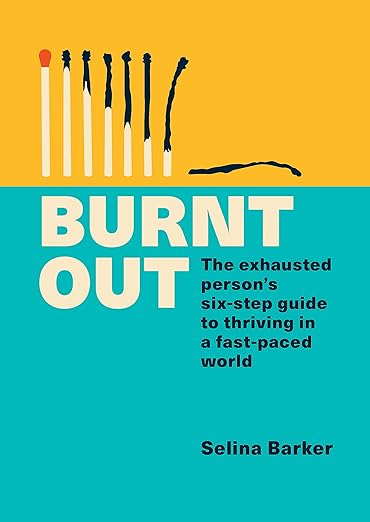
During the pandemic there was a little glut of books on burnout. And for this Great Work project I read most things that are published on burnout. I apply a fierce practicality test: could this actually help real people? Really?
This one stood out. Selina Barker’s a British coach (the burnt spelling), and her book’s about as practical as a book can be. It’s full of color, boxes, and exercises. I opened it with my bullshit sensors on full power. But the book is, in fact, full of intelligent, easily-applicable advice that harmonises with the research, and therefore with the advice I collect here and in the forthcoming Great Work book.
If you’re dealing with burnout right now, or know someone who is, and you’re looking for an intelligent way through it that you could start applying tonight, I don’t think there’s a better guidebook out there.
Amazon USA, UK, Canada, India.
Bree Groff, Today Was Fun: A Book About Work (Seriously)
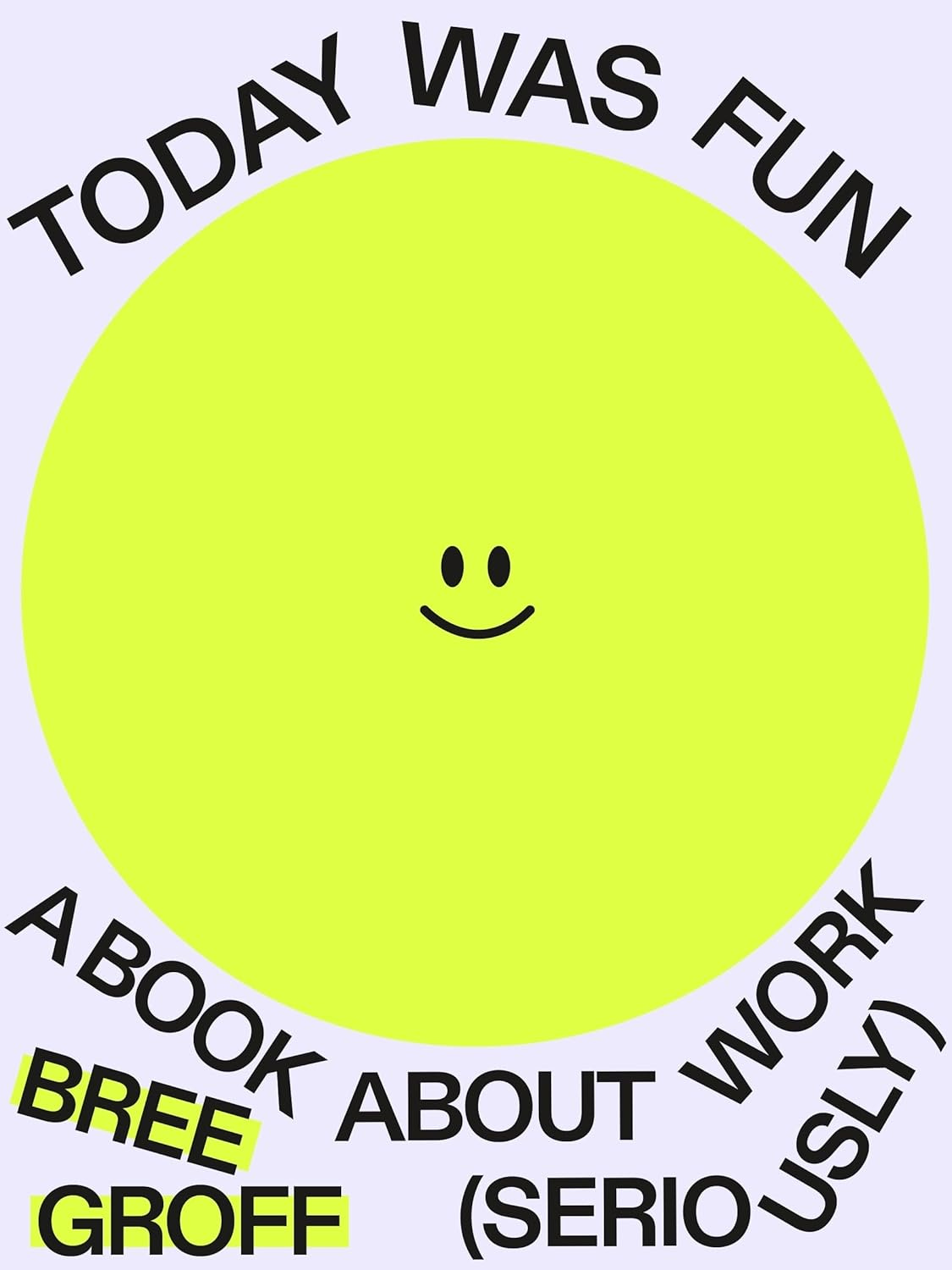
This quirky book is, as it should be, a load of fun. Bree Groff’s a consultant from the world of business, but there’s plenty here for Great Work readers who work in public and non-profit settings. Today Was Fun is an irreverent manifesto for work being joyful, and a guide to how to get there. I loved the section on really getting to know and enjoy your colleagues, and a passage on what Groff calls emotional reliability.
It’ll be most useful if you have some leadership responsibilities. If you do, it’s a delightful book.
Amazon USA, UK, Canada, India.
Kathryn Page, Good Work: Transform Your Work from the Inside Out
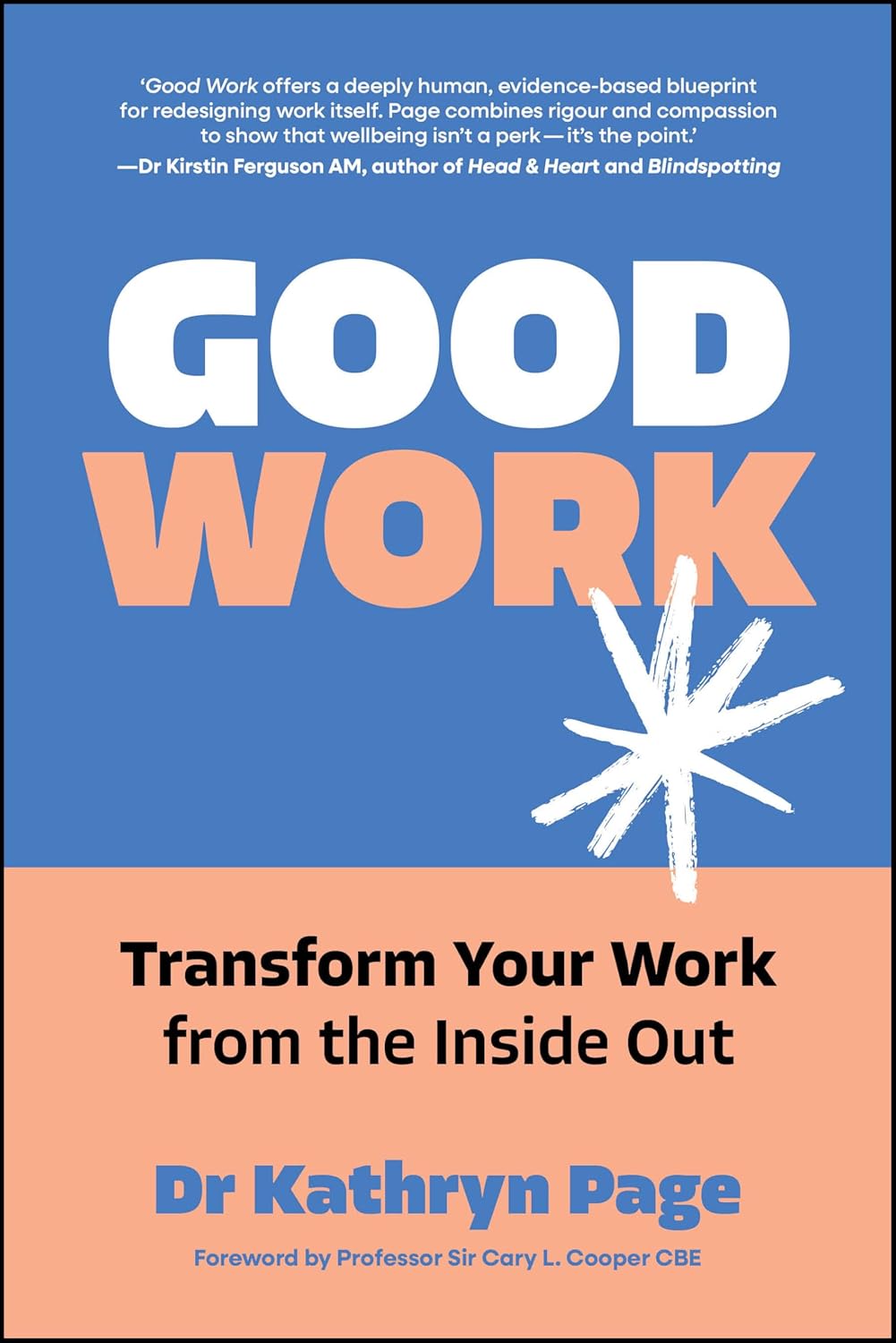
This book’s just published and achieves two unusual things. First, it successfully considers both us, people who work, and those who are trying to improve working lives in their teams and organizations. And secondly, it refreshingly doesn’t assume that all work is done in commercial settings.
Kathryn Page is an organisational psychologist. Her book’s grounded in solid research but it’s also practical, readable, and short. It gets an extra star for sneaking the word shite past academic publisher Wiley. If you have a bit of sway at work and want to think more about making work better for everyone, this might be the book to help you frame how to achieve that—and how to improve your own working life at the same time.
Amazon USA, UK, Canada, India.
Joseph Jebelli, The Brain At Rest: How the Art and Science of Doing Nothing Can Improve Your Life
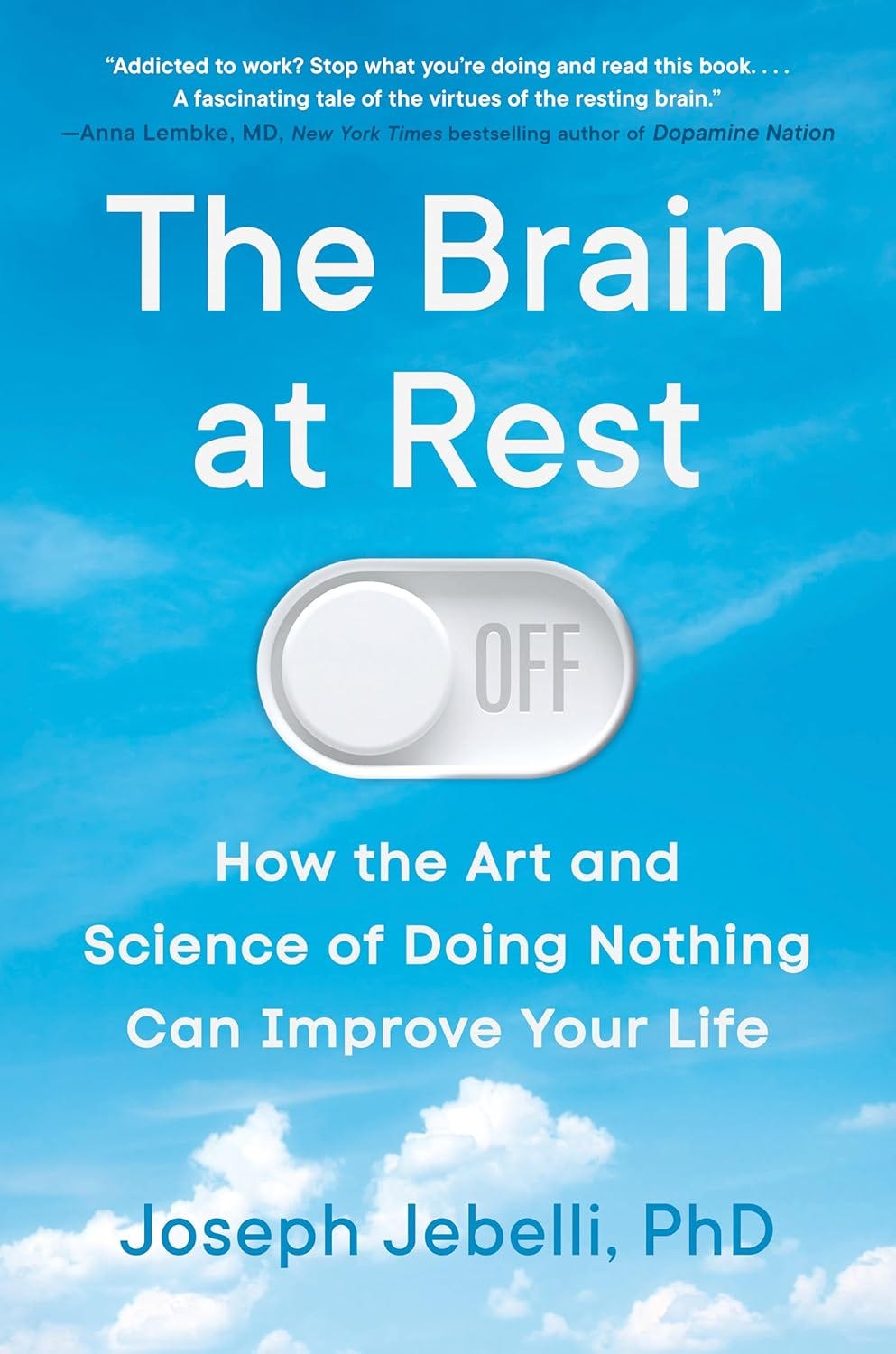
If you’re a regular reader, you’ll know that I can only write so many Great Work articles before being overtaken by the compulsion to recommend Alex Soojung-Kim Pang’s book Rest: Why You Get More Done When You Work Less, a book that radically changed my life for the better. Do we need another book on rest?
It turns out that we do! This gentle book, by neuroscientist Joseph Jebelli, skillfully weaves research and personal narrative into a new and persuasive paean to rest. It’s full of wise advice.
Amazon USA, UK (super-cheap paperback now available in the UK), Canada, India. Subtitle seems to vary with region/version.
P.S. It makes my day to hear from a Great Work reader. Just click ‘reply’: it’ll come straight to me.
PS Meet me at a conference
A couple of upcoming conferences at which I’ll be speaking …
BC Rural Health Conference
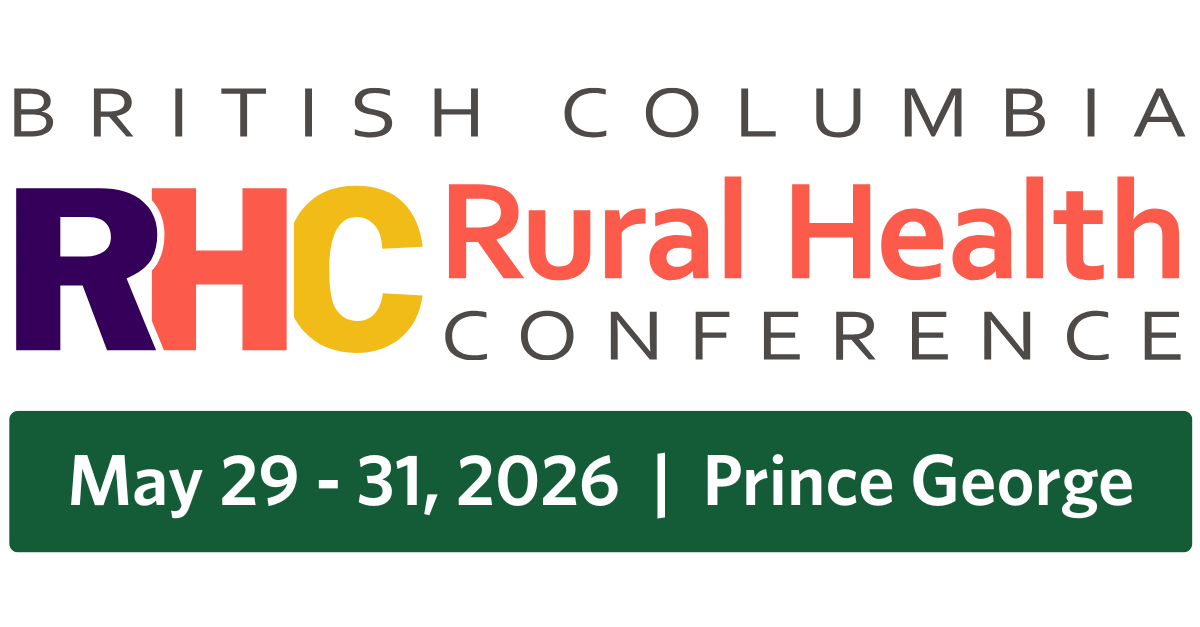
Such a lovely conference for people providing health care in rural settings in Western Canada and further afield. I’m giving the closing plenary: I’ll be talking about small changes you can make to have a better working life. Conference info here.
Workplace Mental Health Conference
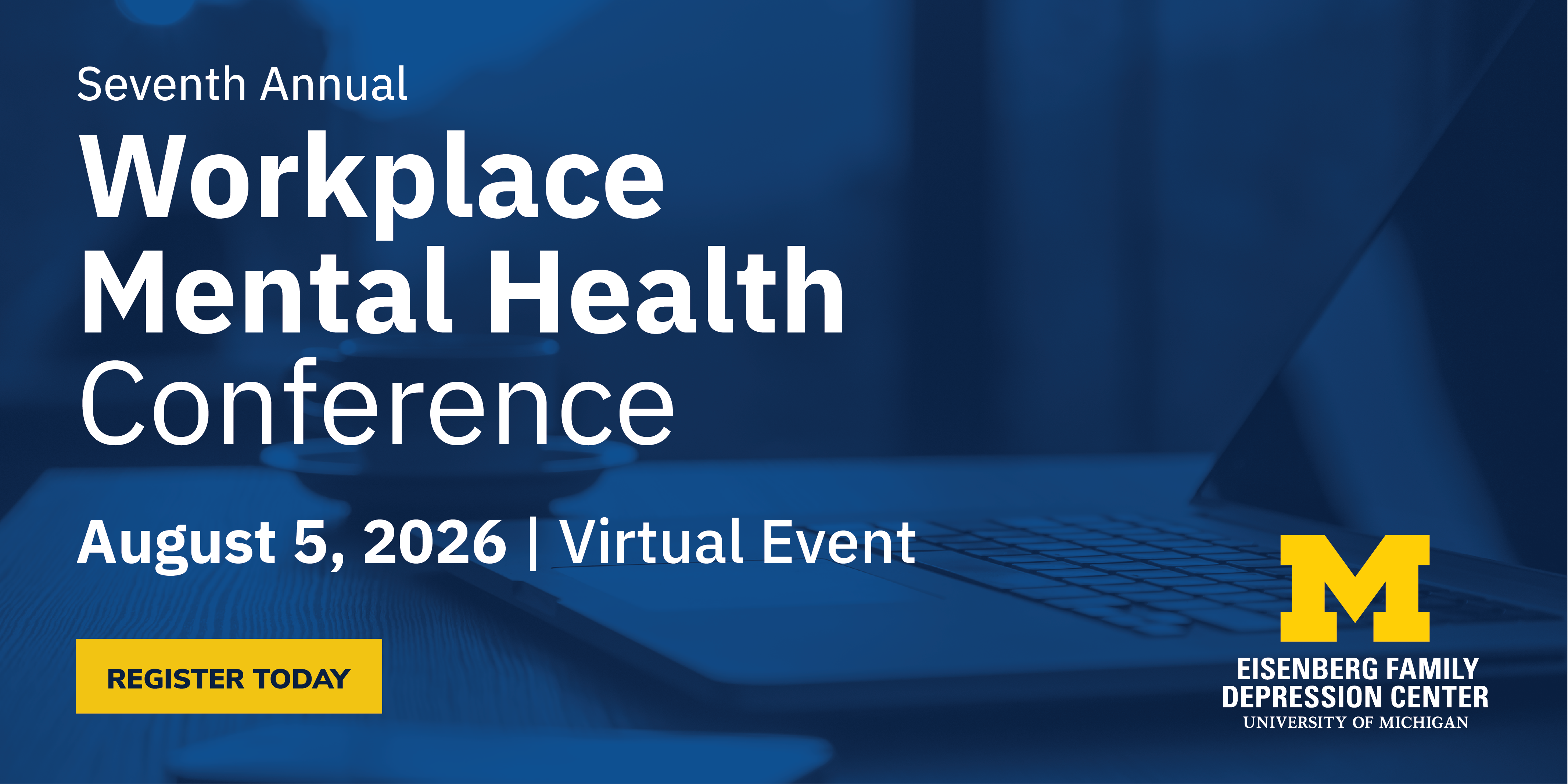
The University of Michigan (Eisenberg Family Depression Center)’s virtual half-day conference on workplace mental health. A really interesting lineup of speakers. The focus is on how organizations can better support employee well-being and success: I’m talking about emotional regulation at work—what can employers actually do? Conference info here.
New here? Not yet signed up? Sign up! It’s free, practical, evidence-based, never spam, and bullshit-free. ⤵
And, if you find Great Work useful, please do share it with others who might like it too. Thank you! ⤵
Are you a LinkedIn person? ⤵