



Doctors don’t often talk about our mistakes, while quietly nursing shame and fear of consequences. This is a problem. And so I’m going to tell you about one of my medical errors. There are lessons for anyone who does work that matters and who worries about getting things wrong, or finds it hard to cope when they do.
The mistake
My patient was someone who was getting three-monthly hormonal injections for contraception. These have been around forever and fewer people use them now—there are often better birth control options. But they’re right for some: one easy injection a few times a year and nothing else to remember.
The first time I met her, I checked when her last injection had been. We had a few weeks to run. So, as well as trying to help her with some other things, I booked an appointment for her next injection. (UK medical readers may be puzzled here: in Canada, it’s mostly doctors, not nurses, who do this stuff.)
When she showed up for that next appointment, I did the date calculation again and realised I’d made a mistake the first time. When I’d first met her, she had been due her injection, and we were now several weeks late—well outside the window during which the injection can be relied upon for contraception. And that was entirely my fault.

I told her what had happened, and apologised profusely. We did a pregnancy test, which was negative, but that didn’t rule out an early pregnancy. And we figured out her contraception going forward.
And then I waited, anxiously. The least bad outcome of this would be that she may worry until we had another negative pregnancy test in a couple of weeks. But there were a lot of worse possible futures, all beginning with an unwanted pregnancy when she’d put her trust in me to prevent that. And an unwanted pregnancy’s big.
This was a really stupid mistake. I spend much of my time as a doctor making complex judgment calls about how to best balance people’s heart failure, kidney disease, blood pressure, and frustration with how many medications they’re taking, or working to build trust with traumatised people. Those are hard things to do. This was easy, and hardly even a medical error: it was a subtraction mistake.
She didn’t show up for another pregnancy test when I’d hoped she would, and wasn’t answering her phone. And I already wasn’t at my best, and started carrying a dark cloud of worry around with me for weeks. What if she’s pregnant? What if that’s awful for her? What if there’s some terrible complication? What if my mistake has professional consequences for me?
I told my partner (she’s a nurse practitioner) what was on my mind, making sure it was anonymous. I suppose it’s not the worst medical error it’s possible to make, I said, trying dolefully to make myself feel better. “I don’t know,” she replied. “What if she gives birth to Hitler?” But the dark humour came with kindness, and that helped.
And it was OK. No pregnancy. My patient showed up again, some time later, to see me (when she could have chosen a colleague). Her life moved on. Mine did, too. But it could easily have been life-changing for her.
And in case you’re wondering: yes, I did ask her how she’d feel about me writing this here, and yes, she generously gave me her permission to do so. (And I’ve altered some details.)
How to cope with mistakes
Earlier in my career I would have handled this worse. And this is not the worst medical error I’ve made in all the years I’ve been a doctor. For that, you’ll need to hold out for the book I’m writing.
But there are lessons here. And, having taken my mistakes really badly in the past, I’m going to acknowledge that I have learnt from those experiences, and I handled this one a bit better as a result.
(1) Apologise
Apologise, clearly, sincerely, and without hedging. When things do go wrong a genuine apology, really helps people deal with it. And it makes you feel (a bit) better, too.
Sometimes people’s first reaction is anger. That’s understandable. With time, it usually dissipates. I’ve almost always been able to rebuild relationships after that—and the prompt apology helps with that.
Lawyers will tell you that, often, an early apology prevents litigation. Recognising this, many parts of the world have legislated to encourage apologies by saying that they won’t be treated as admissions of legal liability. (Get advice.)

(2) Do what you can to fix it
This is almost too obvious to mention, but not quite: do everything you reasonably can to put it right. That’s your responsibility now. And doing it quickly and effectively—this is a time to go out of your way for people—may reduce any harm caused, as well as the likelihood of adverse consequences for you.
(3) Document it
Remember I used to be a human rights lawyer? I spent a lot of time in court cross-examining police officers, prison officers, doctors, and others who’d screwed things up for people with horrifying consequences. Few things look worse than trying to hide it. Like apologies, a full, neutral record of what happened helps.

(4) Get advice, if you need it
This was one where it would have been reasonable to have called the organisation that would support me in the event of a malpractice claim. Let’s not beat around the bush: I was negligent.
On this occasion, I didn’t call, because, at that early stage, I knew what to do, and because there was no way I wasn’t responsible for this. If there had been more nuance to this, if I’d been earlier in my career, or if I wasn’t a former lawyer, I would have.
If in doubt, speak to whomever you speak to in these situations—which for you might be a boss, supervisor, department head, or school principal.
(5) Worry about it
You’re going to, and it’s not pleasant. (There was a point at which I was trying to soothe myself by digging into research into the risks of pregnancy given the exact amount of time my patient’s injection had been overdue, hoping it would reassure me—when, of course, that research hasn’t been done.)
But I want to make the controversial suggestion that, so long as your worrying doesn’t become pathological, it may be good, and perhaps even something to welcome. Because this is how you learn and get better.
There are all sorts of lessons. What predisposed to this? How could this have been avoided? What could I have done differently? Are there skills or knowledge I need to work on? Is there a new habit I can build that would reduce the risk of this happening again? Could I have responded better when I realised this had happened? How can I best look after myself in this situation?
It’s important not to let yourself off the hook just because (as in this case) chance was kind to you. The fact that nothing awful happened, or that no one complained, doesn’t mean you shouldn’t look for opportunities to learn, or forget about it.
What did I learn here? Well, several things predisposed to it: I was in a new job, which adds a bit of stress, and it was a busy day, and I was running late, and, more generally, I wasn’t functioning well at the time this happened. I think those were all factors in my usual, reliable sanity-check (“Do those two dates look like they’re n weeks apart?”) misfiring. (I got a few other, more trivial things wrong around that time and subsequently discovered, to my surprise, that I’d been severely iron deficient, and had been experiencing the cognitive effects of that. I’m amazed by how much better I’m now performing, having got some iron back into my bone marrow! And it’s helped me understand how iron deficiency affects my patients.)
I was reminded of how much easier this goes when you immediately, candidly, apologise, and take responsibility.
And, although this wasn’t all about me, I was reminded how rare it is for these things to have serious consequences for normally conscientious people who make an honest mistake.
(6) Look after yourself
Many things become easier the longer you spend doing the tough work that you and I do: one of them is coping when you’ve made a mistake.
They should worry you: if they don’t, something’s wrong.
We absolutely should do everything we can to do the best job we can and, when something goes wrong, it’s vital to act promptly and responsibly.
But we’re human. Over the years, I’ve made plenty of mistakes—some trivial, a few serious. Everyone with whom I’ve worked for long enough to know has made occasional mistakes too. If you’ve not made any, you’re either unhealthily resistant to self-criticism or you haven’t been doing the job for long enough. This stuff happens even to the best of people. And I’m not the best of people.
Thankfully most mistakes have no serious consequences. But sometimes really bad things happen and you’ll be responsible. You’ll be wracked with guilt. You might be sued, or have to respond to a formal complaint. Even in these horrible situations it’s important—not just for you but for those your work serves—that you’re able both to learn from it and to come to terms with it and to keep on doing your important work.
So look after yourself. Talk to kind, fair people about it. If you’re beating yourself up about it, that’s telling you that you’re taking it seriously. You can’t do tough work without making mistakes. Do the things above—apologise, fix it if you can, get advice if you need to, document it, learn from it. Next: well, you’re not going to forget about this. Rather, file it in your mental “Things I’ve learnt from” box for future reference. And then, move on.
My “Things I’ve learnt from” box is huge, and the hinge on the lid is broken, now, from my going in there several times a day to rummage around.
We don’t talk much about our mistakes. If we did, if we normalised this, we’d find our screw-ups easier to manage, and we’d learn more from them (and from other people’s), and we’d all do a better job. We’d have less of a blame culture and more of a learning culture.1 This is why we should push back—as I’m trying to do here—against the culture of not talking candidly about those times when we get things wrong. Everyone does.
Beating yourself up about your mistakes is the hallmark of conscientiousness. Do it. And then move on.

PS Grateful thanks to my patient for allowing me to write this.
PPS For anyone sometimes feeling overwhelmed by all the voices saying we’re on the brink of the apocalypse, a wonderful article by Oliver Burkeman.
PPPS If you’re willing to take a moment to give me some feedback—what’s useful? how could I help you more?—click here (it’s very short). Thank you!
New here? Not yet signed up? Sign up! It’s free, practical, evidence-based, never spam, and bullshit-free. ⤵
And, if you find Great Work useful, please do share it with others who might like it too. Thank you! ⤵
Are you a LinkedIn person? ⤵
Meet me at a conference!
Workplace Mental Health Conference
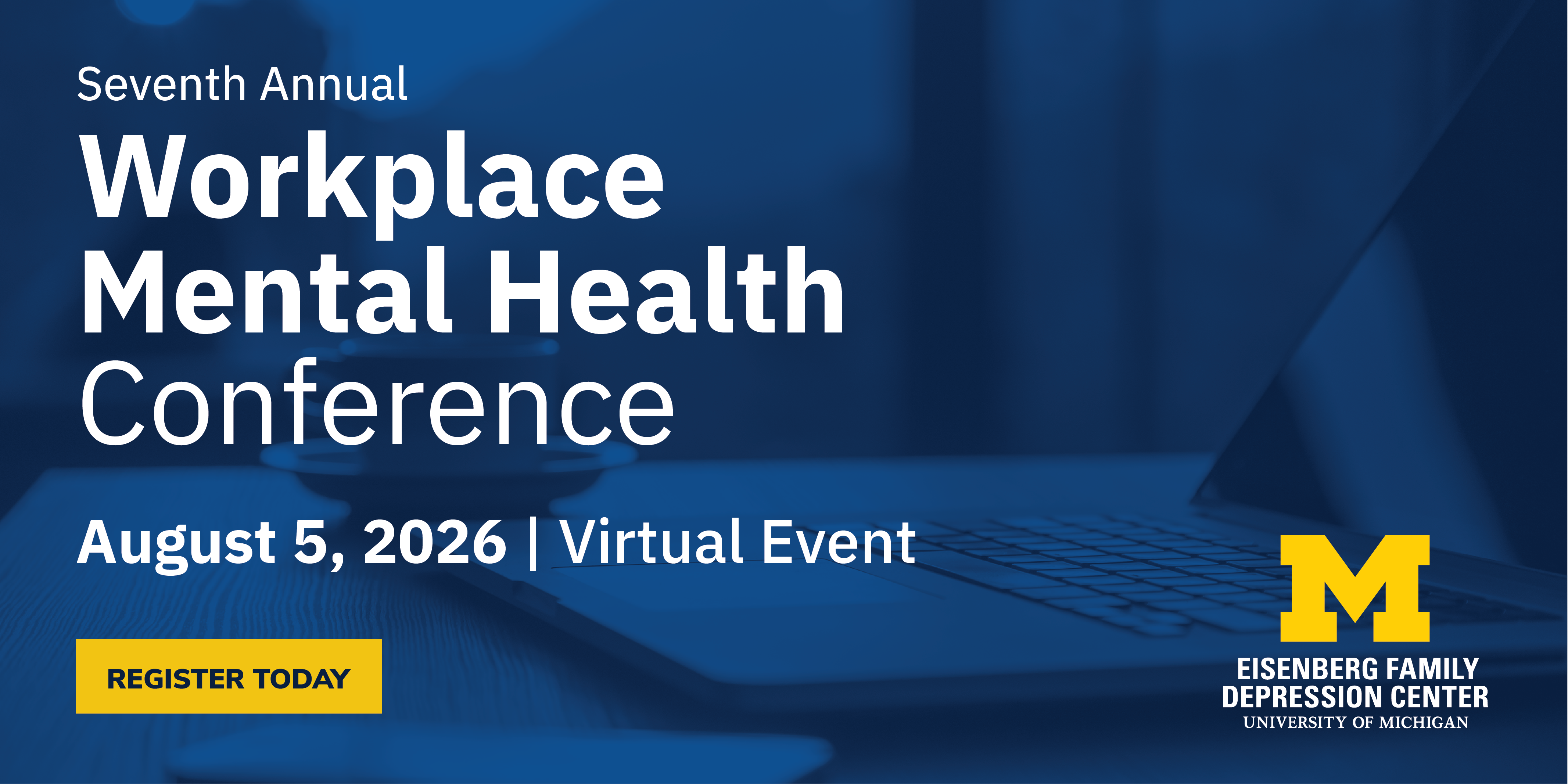
The University of Michigan (Eisenberg Family Depression Center)’s virtual half-day conference on workplace mental health focuses on how organizations can better support employee well-being and success. August 5th, 2026. A great lineup of speakers (plus me). I’ll be talking about emotional regulation at work—what can employers actually do? Conference info here.
researchED

researchED is a wonderful, international conference for teachers who want to use good evidence to teach better. I’ll be at the researchED UK National conference in London on 5th September 2026 and at researchED St Louis (USA) on September 26th, 2026—speaking about how teachers can have better working lives, because there’s good evidence that wrung-out teachers leave and that teacher turnover harms learning.
James Reason, who came up with this distinction, called these “blame culture” and “just culture”: James Reason, Managing the Risks of Organizational Accidents (Ashgate, 1997).
Thanks so much for sharing this, it was really meaningful to read it – and, I imagine, rather difficult to write it.