



The thing that often makes the biggest difference to how we feel about our work: the team within which we do it. And a lot of teams aren’t doing as well as they could.
Does your team, and the way it runs, make your work harder, or easier? Is everyone looking out for themselves, or is there a culture of support? Are things forever going wrong, or do they just work? And, maybe most importantly, if you’re asked what’s good about your job, would one of your answers be “My colleagues”?
The foundation for improving things is understanding the dual importance of teams being both kind and businesslike, what those terms actually mean, and why this is the starting point for making everything better.
I wrote about this in the very early days of Great Work. Then, I had fewer than two hundred readers. Now we’re in the thousands, and my understanding of this kind–businesslike thing has grown. So: it’s the right time to revisit it.
The Kind–Businesslike Matrix
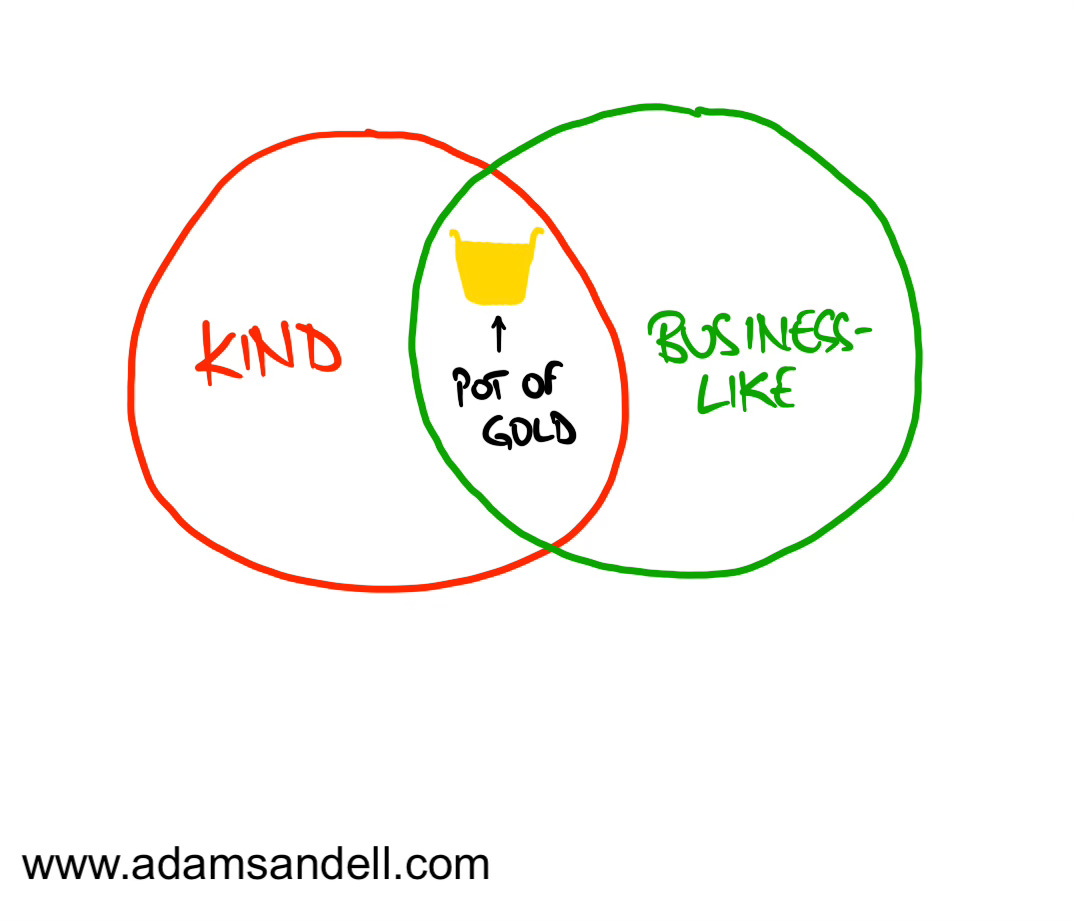
Let’s start by defining two terms.
Kind is easy. Teams that are kind are made up of people who are there at least partly because they care. And these teams have a culture of treating everyone decently—colleagues, those they serve, their learners, their community, people in other organizations.
Teams that are businesslike make savvy decisions, and they’re good at implementing them. They communicate well, within and beyond the team. People’s responsibilities are clear. They’re well-managed, not just administered: they respond calmly to challenges, and plan for the future. They have good systems that make people’s work easier, safer, and better, and that don’t get in the way. And, when something goes wrong, these are the teams that enthusiastically learn from it.
What businesslike doesn’t imply is that your team is a business, any more than kind implies a charity. Nor, in this kind–businesslike matrix, do those terms imply anything about where you sit on the political spectrum. Whatever it is your team does, if it’s going to do it well, it needs to be both. If you’re not businesslike, your kindness will be less effective. And being kind is a prerequisite for being truly businesslike. Kind and businesslike together are necessities for team serenity and success—and for your serenity and success.
And they’re not alternatives. Being kind doesn’t mean being unbusinesslike, and being businesslike doesn’t mean being unkind. If they were axes on a graph, they’d be at right angles to each other, orthogonal. A team can sit anywhere on this graph (and can move).
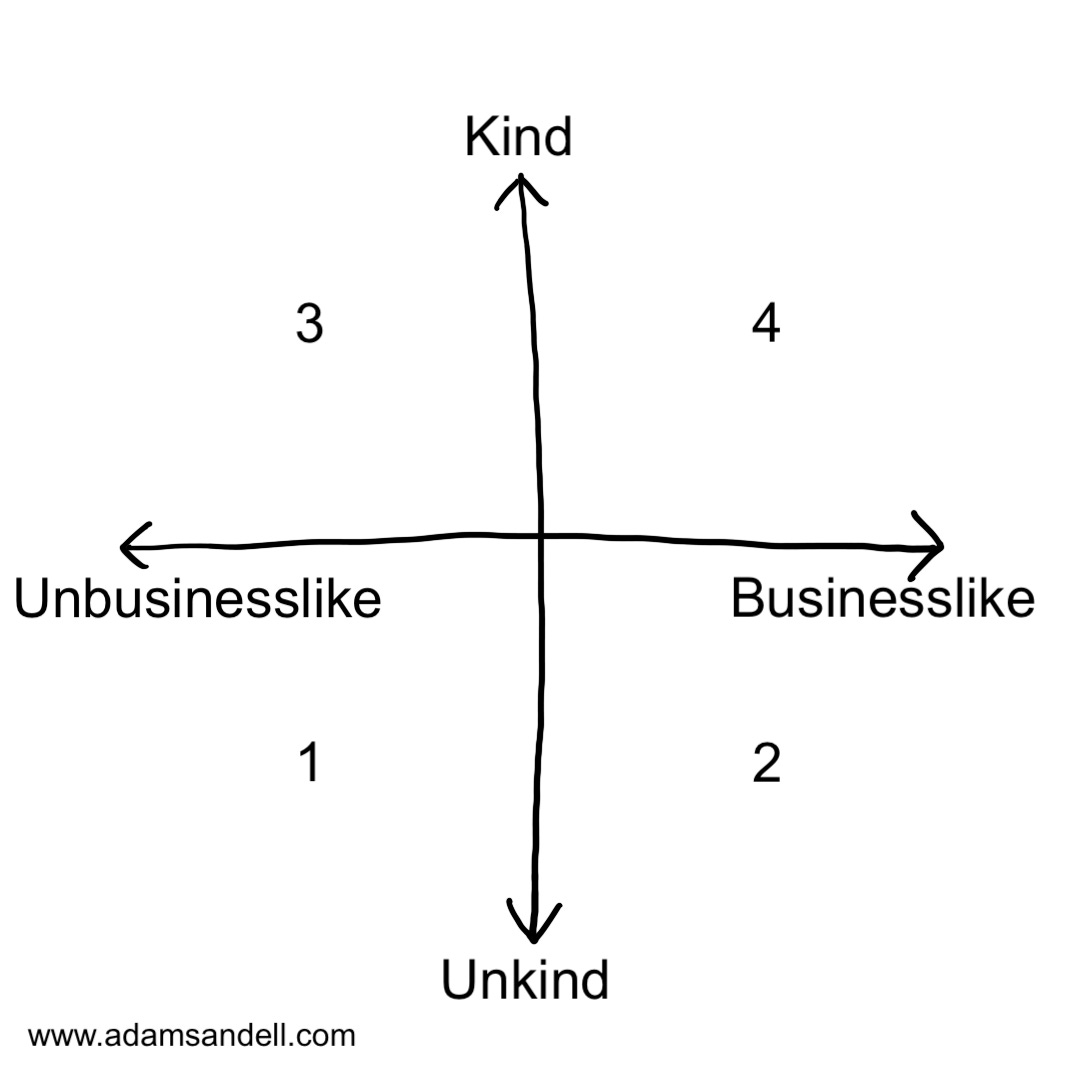
Let’s consider four types of team—the four quadrants on that graph.
Teams that are neither kind nor businesslike (quadrant 1): there aren’t many of these around. That’s because they tend to fail—often quite quickly.
Teams that are businesslike but not kind (quadrant 2): if you’ve worked in enough organizations, you may well have experienced one of these. They can do well for a time. But they usually come off the rails after a while, because good people decide they don’t want to work there. They become unfulfilling places to work. Cohesion deteriorates. People who can leave do.
Teams that are kind but not businesslike (quadrant 3): these can be lovely places to work, and their members tend to be deeply loyal to them. In easy times these teams often do well. It’s when things become challenging that they struggle. The team doesn’t adapt well and becomes overwhelmed, blaming circumstances, and hoping for better times to come along. People become stressed; some burn out. These teams may see difficult situations as crises, and are prone to the “Once this difficult period is over” fallacy.
Teams that are kind and businesslike (quadrant 4): yeah, you see where I’m going with this … These are the teams that are a joy to be a part of, that support their members to do their work well and make a difference—the teams that thrive. This is how teams should be.
And among the many teams I’ve worked with in health care, law, academia, and public and non-profit organizations, by far the commonest of these four types is the third type: teams that are kind, but that would be happier and more productive places if only they were more businesslike.
You may have a pretty good idea of where your team sits on that graph. But, if you think you’re in quadrant 4, the kind, businesslike, thriving one, you should check. Businesslike but less-than-kind teams tend genuinely, and mistakenly, to believe they’re where they have to be. And fear of change or of losing their special ethos, or skepticism about taking management seriously, often convince kind but unbusinesslike teams that they’re as businesslike as they should be.
How can you be sure? Having experience of a variety of teams gives you perspective. But the people with the most insight are often those members of the team who have the least sway, and, especially, those who’ve joined recently. Ask.
Once you know, or discover, that you need to become more businesslike, or more kind, you’re already part-way there. This is something to think about, to feed into decision-making—especially the bigger-picture conversations for which you should be making time, every so often, as a team.
How do you get there?
Kindness deficits are hard to fix in a team that doesn’t recognize the need: if you’re stuck in a team like that, you may want to consider your options. But, if it’s the team that has identified the need, you can choose to make it more a part of the team’s culture. Ensure that each decision, the everyday stuff as well as the big ones, is influenced by that priority. One way of supporting this may (again) be to make a genuine effort to listen to those in the team who have the least voice, those who’ve joined recently, and those the team serves—and then to look for the truth in what they say, not for reasons why they’re wrong.
The more familiar situation, the kind team that would do better were it more businesslike? This is an easier fix. Again, this needs to become a part of the decision-making. You need to make sure you’re making time, regularly, when you all have the headspace, to think the big thoughts about how things can improve and to make plans to do so. You need to make sure decisions are made well and then implemented well (SMART plans!). All this is at the heart of being businesslike. You need to optimize your systems, and have a process for keeping on top of them. Tackle the important but non-urgent stuff, now: it’s always going to feel as though there’s something more pressing to be done. Have effective meetings. You may need to overcome reluctance to getting some outside expertise in to help you figure some of these things out. (Unbusinesslike teams tend to be skeptical about this, but the right person really can help.) You may also need to work on your team’s comfort with having healthy, productive discussions about things about which people disagree.
This idea, that good teams are kind and businesslike, is the foundation of healthy, effective, fulfilling teams and organizations. And the starting-point is to think about it: to consider where your team’s deficits are (most have them), and what you can do, together, to move into that kind-and-businesslike territory where things hum.
If your team were to make one change to anchor it firmly in the kind-and-businesslike quadrant, what would it be?
The core Great Work principles
This email’s one in a series outlining the seven principles upon which Great Work is based. If you missed any of those, here’s what we’ve covered so far:


… and this one, the kind–businesslike matrix.
Three more coming!
How could this be better?
I want to make these emails and podcasts more useful to you. Would you do me a one-minute favor? Click here and answer two questions—what you like about Great Work, and how it could be better. Thank you!
And, if you’ve already completed this survey, thank you too. One thing I’ve recently learned from feedback is that I need to say more about combining great work with caring responsibilities outside of work. Which I will do!
And now for something completely different

New here? Not yet signed up? Sign up! It’s free, practical, evidence-based, never spam, and bullshit-free. ⤵
And, if you find Great Work useful, please do share it with others who might like it too. Thank you! ⤵
Are you a LinkedIn person? ⤵
And if you’re new to Substack, there’s an app, and there’s some great stuff there. ⤵
